Keene, New Hampshire — A Photographer's Quiet Paradise
Brick-lined streets, a steeple piercing the morning fog, and the Monadnock region stretching out in every direction.
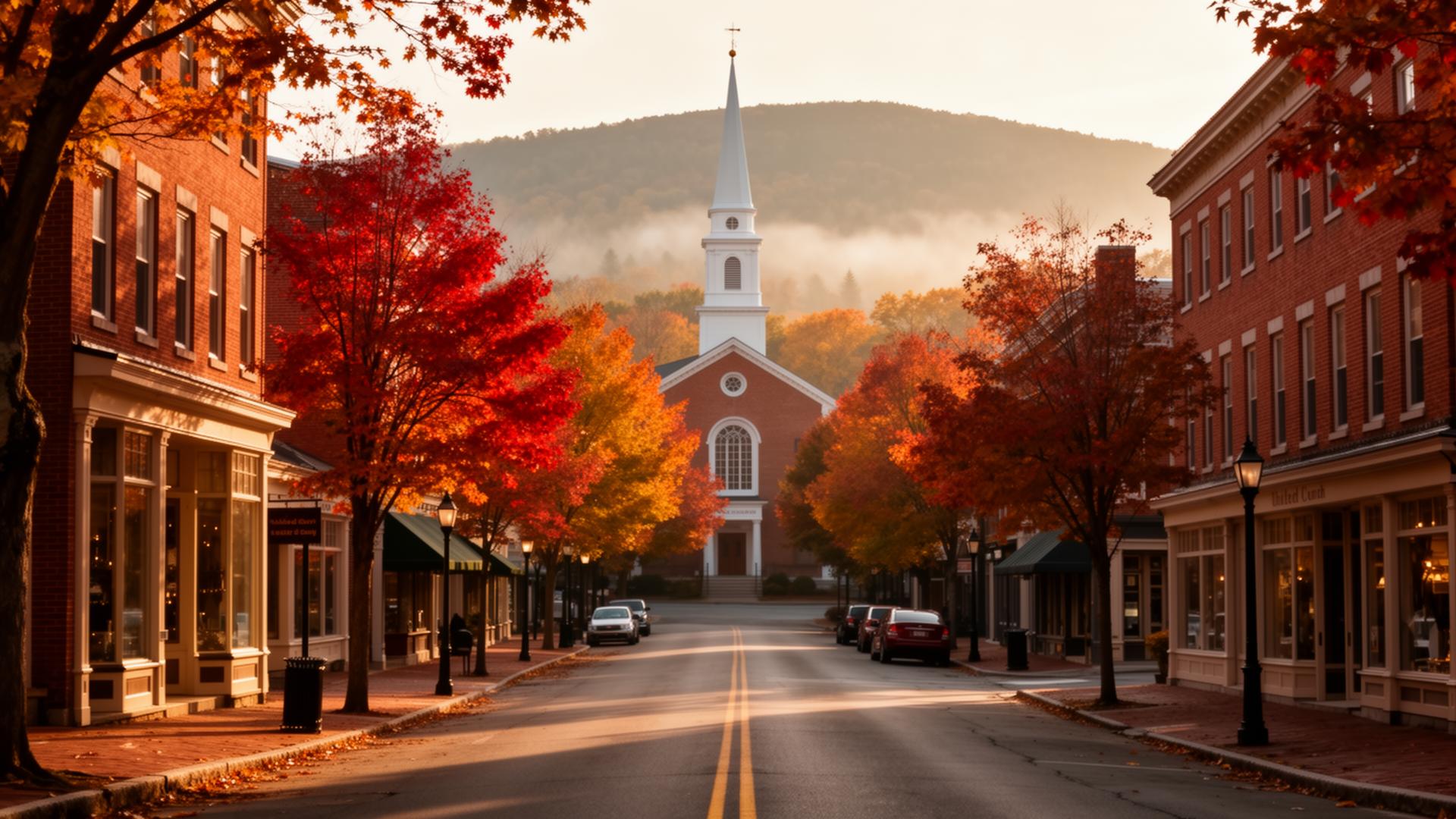
There are towns that ask to be photographed, and there are towns that simply are photographs. Keene, New Hampshire belongs firmly to the second camp. Set in the Monadnock region of the state's southwest corner, this small city of brick and church bells has spent more than two centuries quietly composing itself for the camera.
I've lived and worked here for over a decade, and I still find myself reaching for the shutter on the walk to morning coffee. The light moves differently in a valley like this one. The hills hold onto the mist a little longer. The steeple of the United Church catches the first warm pass of the sun before the rest of the town has finished waking up.
The Widest Main Street in America
Keene's Main Street is famously, almost theatrically, wide — a generous corridor of red brick laid out in the early 1800s for ox carts and church-day crowds. Today it functions as one of the great natural studios in New England. The buildings on either side are a gallery of 19th-century Federal and Greek Revival storefronts, their cornices and lintels reading like type set in a quiet, confident serif.
Stand at the south end just after sunrise and the whole street becomes a study in perspective. The double yellow line draws the eye straight to the white spire. Maples line the sidewalks in colonnades. In October those trees catch fire — vermilion, amber, oxblood — and the brick behind them turns the color of old wine.
Mount Monadnock and the Surrounding Hills
Drive twenty minutes in almost any direction and the town gives way to landscape that has inspired writers from Emerson to Thoreau. Mount Monadnock — said to be one of the most-climbed mountains in the world — sits like a quiet sentinel on the eastern horizon. Its bare summit catches storms first, then sunlight, and is the kind of subject that rewards a photographer who is willing to wait.
Around it, a quilt of stone walls, white-clapboard farmhouses, covered bridges, and slow rivers — the Ashuelot winding through hemlocks, beaver ponds smoking at first light, sugar maples that line dirt roads where the only sound is your own footsteps on frozen mud.
Four Seasons, Four Different Cities
What makes Keene rare for working photographers is how completely it reinvents itself across the year. Autumn is the headline act — the Pumpkin Festival, the foliage, the air so clear it feels like fiction. But winter brings its own austere beauty: snow piled neatly along the brick sidewalks, the green of pine darkening against gray sky, breath visible in every portrait.
Spring arrives slowly and politely. By May the commons are full of students from Keene State College, the magnolias have opened, and the rivers run high and loud. Summer turns the whole valley soft and humid; thunderstorms roll over the hills in the late afternoon and leave behind the cleanest light of the year.
Why I Photograph Here
There's a kind of photography that depends on spectacle — the famous skyline, the impossible mountain. Keene is the opposite of that. It rewards patience. It rewards the photographer who is willing to walk the same block at six different hours, in five different seasons, until the light says something true.
If you are planning a wedding, an editorial portrait, or a brand campaign and you want a backdrop that feels like a memory before the shutter even closes — this small New Hampshire city is, quietly, one of the most photogenic places in America. I'd be honored to show it to you through the lens.
Work with Thomas
Planning a session in the Monadnock region or beyond? Let's talk light, location, and legacy.
Get in touch